
Your Impact
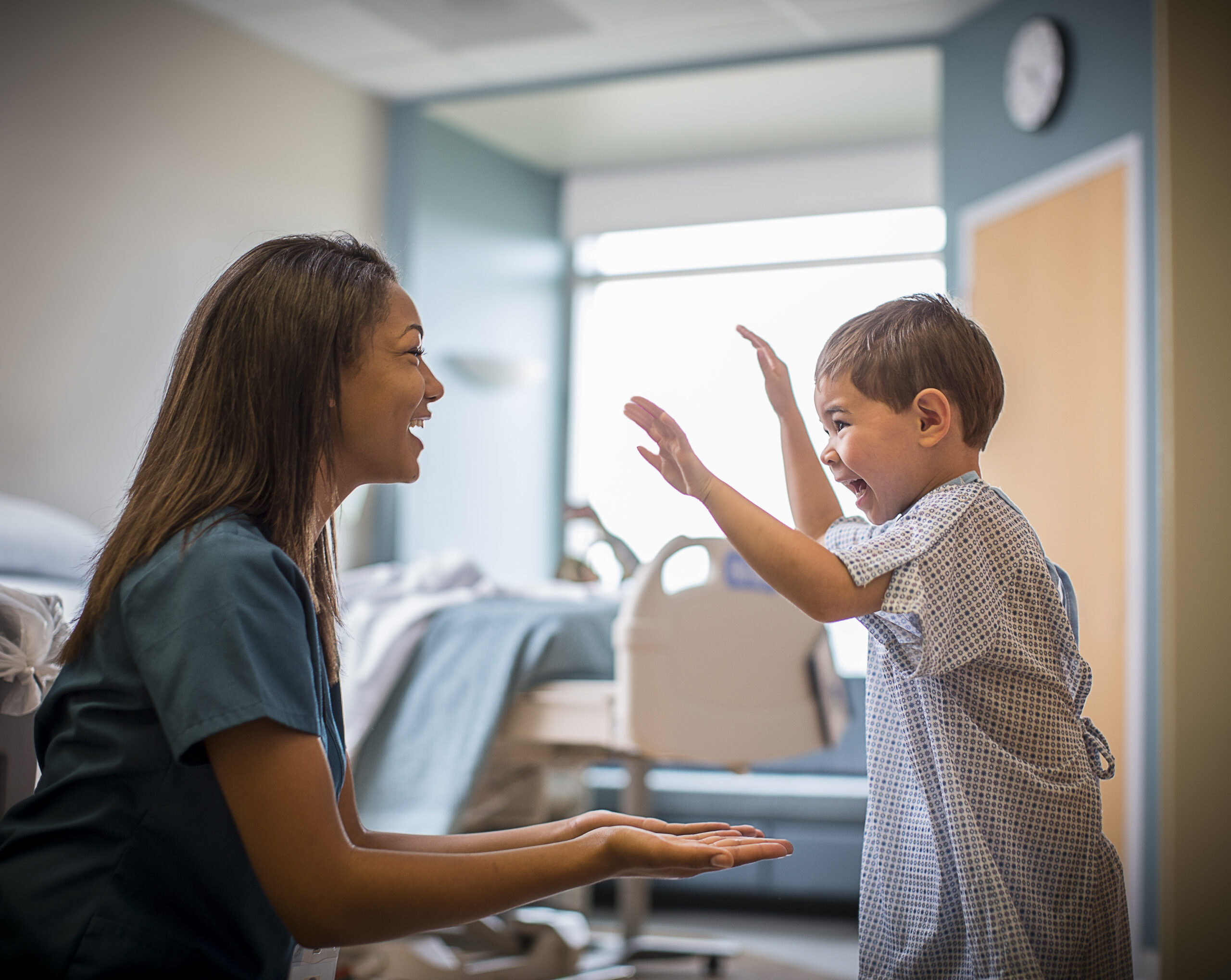
Legacy gifts to Nicklaus Children’s Hospital Foundation ensure that future generations of children receive the care they deserve. Explore the stories below to see how planned gifts create a lasting impact
A Record-Breaking Year
Over 75 years ago, Nicklaus Children’s Hospital opened its doors with a simple promise: to provide the best care to every child.
In 2025, that promise was kept — in operating rooms, at fundraising galas, and in the hearts of families who found hope here. It was a record-breaking year by every measure, and it happened because of you.
Watch to see the difference your support made.
Florida’s First Partial Heart Transplant
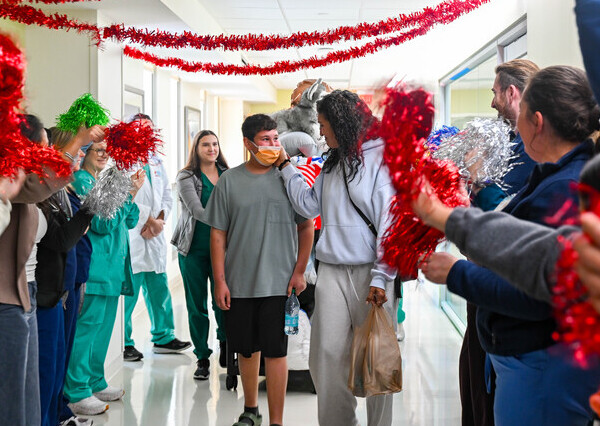
The cardiovascular surgery team at Nicklaus Children’s Hospital’s Heart Institute has successfully performed the first partial heart transplant in the state of Florida on an 11-year-old patient. With an implanted “living valve,” the procedure is designed to prevent the need for future open-heart surgeries because the valve will grow with the child as they age.
Read more
In this major surgical innovation, the living valve from a donor’s heart is implanted in a patient, allowing it to grow with the child. This is an alternative to prosthetic valves that cannot grow as the patient matures. Traditionally used animal-derived and mechanical prosthetic valves deteriorate over time or require daily blood thinners. These non-living valves also need to be replaced over time, leading to additional open-heart surgeries, and are associated with a decreased survival rate after implantation.
This breakthrough procedure was led by Dr. David Kalfa, Chief of Cardiovascular Surgery, Co-director of the Nicklaus Children’s Heart Institute, and Professor and Researcher at the FIU Herbert Wertheim College of Medicine. The partial heart transplant highlights Dr. Kalfa as a pioneer in the development and clinical application of living heart valve implants for children.
“Partial heart transplants are redefining what’s possible in pediatric heart surgery. By transplanting a living valve, we are not just repairing a defect. We are restoring function in a way that allows the heart to grow naturally,” said Dr. Kalfa.
“Our goal is to move beyond temporary solutions like prosthetic materials and provide children with long-lasting, life-changing outcomes.”
Greyson, the 11-year-old patient who underwent the procedure, had two additional heart surgeries as a baby prior to coming to Nicklaus Children’s. His family is hopeful that he will not require another open-heart surgery in the future, thanks to this innovative procedure.
“Going in for a second opinion is what brought me to Nicklaus Children’s and Dr. Kalfa with his years of expertise and research in the field, and I am so grateful for that,” says Piera Archila, Greyson’s mother.
“Greyson underwent open-heart surgery in New York and has since been to a few other children’s hospitals in Florida and outside the state in search for answers for his condition. Nicklaus Children’s offered something unique in that Greyson can now grow up without needing another open-heart surgery.”
Congenital heart defects are the most common birth defects, affecting nearly 1% of newborns in the U.S., or about 40,000 infants. Of those infants born with CHD, half will need an operation to fix or replace a valve.
Dr. Kalfa’s work is supported in part by grants from the National Institutes of Health in collaboration with FIU, advancing research and clinical innovation in partial heart transplantation and pediatric valve preservation techniques.
Nicklaus Children’s Hospital is ranked among the nation’s “Best Children’s Hospitals” by U.S. News & World Report, with seven specialty-ranked programs, including Nicklaus Children’s Heart Institute, ranked the #1 heart program for children in South Florida.
Gabriel’s Story
Some journeys to parenthood are harder than others, and Jessica and Juan Gabriel know that better than most.
After four miscarriages, their fifth pregnancy brought news that no parent wants to hear: their unborn son had a severe congenital heart defect. Determined to give Gabriel every possible advantage, they turned to Dr. David Kalfa and the team at Nicklaus Children’s Heart Institute.
Adam’s Story
Today, Adam is dreaming of what he’ll become when he grows up, but his journey here has been full of challenges.
Before he was even born, Adam was diagnosed with Chronic Kidney Disease (CKD), which ultimately led him and his family to a cross-state move, years of complex care, and a successful kidney transplant at Nicklaus Children’s Hospital in 2023.
Adam’s story is a testament to what’s possible when a child has an exceptional team in his corner.
Groundbreaking Techniques for Congenital Heart Disorders

Saving the Lives of Our Tiniest Population Born with Congenital Heart Disorders, the Institute is Among Few in the Nation Performing These Complex Interventions.
From partial heart transplantation and complex biventricular repairs to innovative procedures in the catheterization laboratory, Nicklaus Children’s Hospital (Nicklaus Children’s) Heart Institute is pioneering new options for children with pediatric heart conditions. These cardiovascular procedures offer hope and solutions to the hundreds of infants and their families born with congenital heart defects (CHD), one of the most common defects in newborns.
Read more
Cardiovascular Surgeons and Interventionists within Nicklaus Children’s Heart Institute have successfully performed the following procedures within Nicklaus Children’s Hospital:
-
Partial Heart Valve Transplantation: One of the first in the nation to offer this type of pediatric heart surgery. In this procedure, only a portion of the damaged heart valve is replaced or transplanted with a living heart valve, preserving the remaining functional valve tissue to optimize heart function. The Heart Institute’s Cardiovascular Surgery program is leading the first CHSS-based national registry in pediatric cardiac surgery, the registry is focused on understanding the new technique of partial heart transplant nationwide.
-
Pulmonary Embolism Response Team: The Catheterization Lab team within Nicklaus Children’s is the first in Florida to offer a PERT in an effort to quickly and simultaneously engage multiple physician specialists to determine the best course of action and coordinate the clinical care for patients who arrive with Pulmonary Embolisms.
-
Biventricular Repair: Designed to avoid long-term issues related to having only one single ventricle, biventricular repairs are a complex procedure aimed at restoring normal blood flow by enabling both ventricles of the heart to function effectively. Nicklaus Children’s is among the few centers in the nation offering the REV operation, in which the cardiac surgical team corrects transposition of the great arteries with ventricular septal defect and pulmonary stenosis by rerouting blood flow and reconstructing the heart’s anatomy.
-
Axillary (Armpit) Open-Heart Surgery: Nicklaus Children’s is one of only a few centers nationwide and the only pediatric hospital in Florida offering Axillary (armpit) open-heart surgery. This innovative approach delivers the same lifesaving heart repair with less pain, faster recovery, and minimal visible scarring.
-
Transcatheter Fontan Completion: Through the Kawashima procedure, Nicklaus Children’s, being one of the few hospitals in the world to offer it, preps patients for the Transcatheter Fontan Completion. The specialized technique reroutes venous blood directly to the lungs, bypassing the heart, which is an intermediary step before the final stage of placing a stent to ensure Fontan circulation. During this process, Cardiac surgeons and interventionists at Nicklaus Children’s collaborate to save children born with only one working ventricle without the need of open-heart surgery.
-
Innovative Valve Repair: Nicklaus Children’s is among a few centers in the U.S. performing innovative valve repairs and replacements using a child’s own living, growing tissue. This includes advanced pulmonary and aortic Ozaki procedures, which use the patient’s own tissue to create durable, growth-accommodating heart valves.
-
Norwood Valved Sano: A modification of the Norwood procedure for hypoplastic left heart syndrome, incorporating a valved conduit to improve blood flow from the right ventricle to the pulmonary arteries.
-
Virtual Reality/Augmented Reality: Used as a surgical planning tool to design a specialized procedure for patients undergoing intervention, Nicklaus Children’s cardiovascular surgeons and interventionists are the first in Florida to use VR before and during procedures for more precision and accuracy.
-
Percutaneous ECMO: A minimally invasive technique used to provide temporary life support for patients with severe cardiac failure. In this procedure, ECMO cannulas are inserted through the skin into large blood vessels without requiring surgery. The ECMO machine takes over the function of the heart and lungs by oxygenating the blood and removing carbon dioxide, allowing the organs to rest and recover. This approach, which is only offered in Florida at Nicklaus Children’s and is the third in the country to do so, allows for shorter procedure time and is less invasive compared to traditional surgical methods.
-
Percutaneous Sinus Venosus Defect Closure – Nicklaus Children’s is the first in Florida to offer the technique to repair an abnormal connection between the pulmonary veins and the right atrium without the need for open-heart surgery. Interventional cardiologists use catheter-based technology to place a closure device, restoring normal blood flow and reducing the risks associated with invasive surgery. This approach offers quicker recovery times, fewer complications, and improved overall outcomes.
-
Ongoing Research Development: The Nicklaus Children’s Heart Institute is at the forefront of research in Congenital Heart Disorders by expanding its team with world-class leaders in AI, computational modeling, tissue engineering, xenotransplantation, and regenerative therapies such as stem cells and exosomes.
Under the leadership of Nicklaus Children’s Heart Institute co-directors Dr. David M. Kalfa, chief of the Section of Cardiovascular Surgery, and Dr. Shyam Sathanandam, chief of cardiovascular medicine, Nicklaus Children’s is leading the way in pediatric cardiac care. Dr. Kalfa also serves as a professor and researcher at FIU’s Herbert Wertheim College of Medicine, where he is focused on transplant innovation, surgical planning, and robotics within surgery.
“My team and I at the Nicklaus Children’s Heart Institute are redefining the possibilities within pediatric cardiovascular surgery in our tireless mission to save the lives of children born with congenital heart disorders,” says Dr. Kalfa. “The surgical techniques used within our operating rooms are designed to ensure optimal outcomes while reducing the need for additional operations. By tailoring each procedure to the unique needs of our patients, we strive to provide enduring care to families that enhances a child’s quality of life and long-term heart health. We are also expanding our clinical team by hiring engineers who work alongside surgeons at the bedside to continuously advance innovation and improve outcomes for our patients.”
“Building on the foundation of my previous research experience, we are transforming care within the Cath lab at Nicklaus Children’s to deliver the most precise and minimally invasive procedures,” says Dr. Sathanandam. “Our mission is to ensure every patient receives life-saving treatments, giving them the best chance at a healthier future.”
Jaxon’s Story
Dara and Cliff were thankful to have Nicklaus Children’s in their own backyard when, shortly after his birth, their Jaxon was diagnosed with craniosynostosis of the metopic suture.
At birth, Jaxon’s parents noticed he had a ridge on his forehead. Upon diagnosis, Jaxon required immediate surgery. After extensive research on where to take their son for the best care, Dara and Cliff were proud to choose Nicklaus Children’s in their own backyard. Watch Jaxon’s heart-warming story.
Nicolas’ Story
When Janer and his wife began to notice a slight tremble in their son Nicolas’s hand, they knew something was wrong. Nicolas and his family searched for help and answers in Colombia. After multiple opinions, he was diagnosed with spinal muscular atrophy type 2 (SMA2). If continued untreated, he may lose the use of some muscles.
After years of searching for answers and trying to navigate the healthcare system in Colombia, their home country, the family was unable to obtain treatment for Nicolas to slow the progression of the disease. Janer and his family decided to move to the U.S. and eventually found Nicklaus Children’s Hospital. Learn more about Nicolas’ story in this video!
Become a Nicklaus Children's Hospital Foundation Insider
Do you want to receive exclusive email updates directly from Nicklaus Children’s Hospital Foundation?
Get direct and instant access to a member of our team, who will share information about your impact, project outcomes and stories from the field.